How AI is Revolutionizing Manufacturing Industries

The manufacturing industry is undergoing a transformation like never before, driven by advancements in artificial intelligence (AI). From optimizing production processes to enhancing quality control, AI is reshaping how manufacturers operate. This blog post explores the various ways AI is revolutionizing manufacturing, highlighting specific examples and practical applications that demonstrate its impact.
The Role of AI in Manufacturing
AI technologies are becoming integral to manufacturing, enabling companies to improve efficiency, reduce costs, and enhance product quality. Here are some key areas where AI is making a significant impact:
Predictive Maintenance
One of the most valuable applications of AI in manufacturing is predictive maintenance. By analyzing data from machinery and equipment, AI algorithms can predict when a machine is likely to fail. This allows manufacturers to perform maintenance before a breakdown occurs, minimizing downtime and reducing repair costs.
For example, General Electric (GE) uses AI to monitor its jet engines and predict maintenance needs. This proactive approach has resulted in significant savings and improved operational efficiency.
Quality Control
AI-powered systems are also transforming quality control processes. Traditional quality control methods often rely on manual inspections, which can be time-consuming and prone to human error. AI can automate this process by using computer vision to inspect products for defects.
A notable example is Siemens, which employs AI to inspect its products on the assembly line. The system can identify defects with a high degree of accuracy, ensuring that only high-quality products reach customers.
Supply Chain Optimization
AI is enhancing supply chain management by providing real-time insights into inventory levels, demand forecasting, and logistics. Machine learning algorithms can analyze historical data to predict future demand, allowing manufacturers to optimize their inventory and reduce waste.
For instance, IBM's Watson Supply Chain uses AI to help companies anticipate supply chain disruptions and make informed decisions. This capability is crucial for maintaining efficiency and meeting customer demands.
Enhanced Robotics
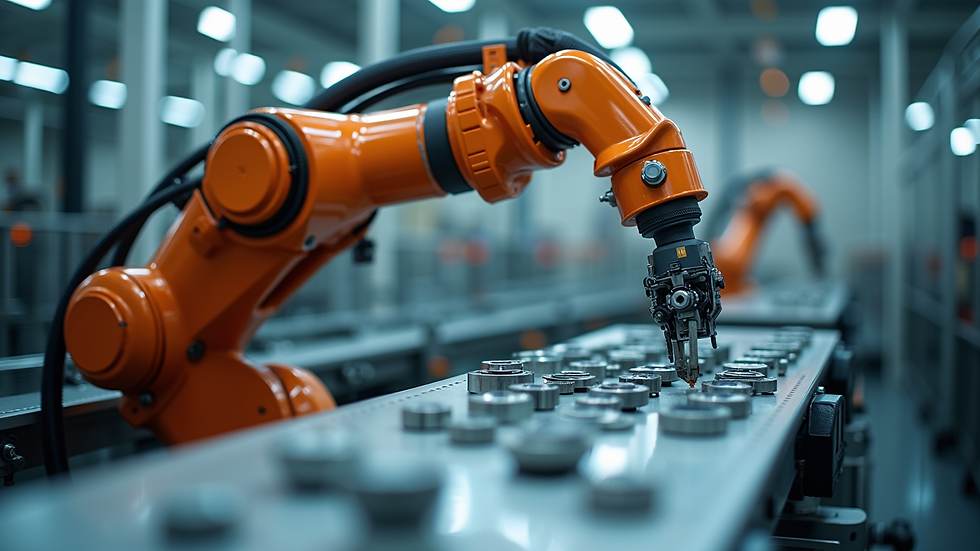
The integration of AI with robotics is revolutionizing manufacturing processes. AI-powered robots can learn from their environment and adapt to changes in real-time. This flexibility allows them to perform a variety of tasks, from assembly to packaging.
Companies like Boston Dynamics are at the forefront of this innovation, developing robots that can navigate complex environments and collaborate with human workers. This collaboration enhances productivity and safety on the factory floor.
Benefits of AI in Manufacturing
The adoption of AI in manufacturing offers numerous benefits, including:
Increased Efficiency: AI streamlines processes, reducing the time and resources needed for production.
Cost Savings: Predictive maintenance and optimized supply chains lead to significant cost reductions.
Improved Quality: Automated quality control ensures that products meet high standards, reducing returns and enhancing customer satisfaction.
Enhanced Flexibility: AI-powered systems can quickly adapt to changes in demand or production requirements.
Challenges of Implementing AI
While the benefits of AI in manufacturing are clear, there are also challenges to consider:
Data Quality and Integration
AI systems rely on high-quality data to function effectively. Manufacturers must ensure that their data is accurate, complete, and integrated across various systems. This can be a significant hurdle, especially for companies with legacy systems.
Workforce Training
As AI technologies become more prevalent, there is a growing need for skilled workers who can operate and maintain these systems. Manufacturers must invest in training programs to equip their workforce with the necessary skills.
Initial Investment
Implementing AI solutions can require a substantial upfront investment. Manufacturers must carefully evaluate the potential return on investment (ROI) to justify the costs.
Future Trends in AI and Manufacturing
As AI continues to evolve, several trends are likely to shape the future of manufacturing:
Increased Automation
The trend toward automation will accelerate as AI technologies become more advanced. Manufacturers will increasingly rely on AI-powered robots and systems to handle repetitive tasks, allowing human workers to focus on more complex activities.
Greater Personalization
AI will enable manufacturers to offer more personalized products and services. By analyzing customer data, companies can tailor their offerings to meet individual preferences, enhancing customer satisfaction.
Sustainability Initiatives
AI can play a crucial role in promoting sustainability in manufacturing. By optimizing resource usage and reducing waste, AI technologies can help manufacturers minimize their environmental impact.
Case Studies of AI in Manufacturing
To illustrate the impact of AI in manufacturing, let's explore a few case studies:
Tesla
Tesla is a prime example of how AI is transforming the automotive industry. The company uses AI for various applications, including autonomous driving, production optimization, and quality control. Tesla's AI-driven approach has allowed it to scale production rapidly while maintaining high-quality standards.
Bosch
Bosch, a leading global supplier of technology and services, has implemented AI in its manufacturing processes to enhance efficiency and reduce costs. The company uses AI algorithms to analyze data from its production lines, enabling real-time adjustments that improve output and quality.
Procter & Gamble
Procter & Gamble (P&G) has embraced AI to optimize its supply chain and improve product development. By leveraging AI for demand forecasting and inventory management, P&G has reduced waste and improved customer satisfaction.
Conclusion
AI is undeniably revolutionizing the manufacturing industry, offering numerous benefits that enhance efficiency, quality, and sustainability. As manufacturers continue to adopt AI technologies, they will need to address challenges related to data quality, workforce training, and initial investments. By embracing these changes, companies can position themselves for success in an increasingly competitive landscape.
The future of manufacturing is bright, with AI at the forefront of innovation. Manufacturers that leverage AI effectively will not only improve their operations but also create a more sustainable and responsive industry. As we move forward, staying informed about AI advancements will be crucial for anyone involved in manufacturing.

Comments